
Consultation About the Scottish Dioceses
Latest Phase in Diocesan Structures Consultation
September 2026
At the request of the Holy See, we the Bishops of Scotland have been considering how our diocesan structures can best serve our shared mission in the years ahead.
This is not simply a question of boundaries, administrative adjustments or the sharing of resources more effectively. Primarily it is about how we can better proclaim the Gospel, support our clergy, religious and lay people, and strengthen our parishes and communities for evangelisation.
As part of this discernment, and informed by the diocesan feedback summaries, we considered a range of possible configurations.
The following options are now being presented for further reflection and consultation across all our eight dioceses:
- Argyll & the Isles and Paisley merge
- Argyll & the Isles and Glasgow merge
- Paisley and Galloway merge
- Galloway and Motherwell merge
- St. Andrews & Edinburgh and Dunkeld merge
- Motherwell, Paisley and Galloway merge
- Maintain the current diocesan structures but with greater sharing and collaboration
These are possibilities for further discernment, not decisions or an agreed map for the future.
As your bishops, we recognise that dioceses are communities of faith with their own histories, relationships and traditions. Any change must therefore be approached with prayer, sensitivity and care for the people and communities involved.
Synodal discernment also asks each of us to look beyond our own self-interests and to consider what will best serve the Catholic Church in Scotland as a whole.
Everyone in every parish is encouraged to make their voice heard when opportunities for consultation are announced locally by their diocesan bishop.
Information packs will be made available in each diocese to support this next phase. These will provide an opportunity to learn more about each of Scotland’s eight dioceses, including important statistics and demographic information, so that the consultation can be informed by a fuller picture of Catholic life across the country. The fruits of the consultation will help us to formulate a concrete proposal to the Holy See.
For completeness, the following options were considered but will not be taken forward:
- Split Aberdeen at the Great Glen. Argyll and the Isles to merge with the territory north of the Great Glen and Dunkeld to merge with the territory south of the Great Glen.
- Dunkeld and Aberdeen merge
- Argyll & the Isles and Aberdeen merge
- Argyll & the Isles and Dunkeld merge
- Glasgow, Motherwell and Paisley merge
- Glasgow and Paisley merge
- St. Andrews & Edinburgh and Galloway merge
- Glasgow, Paisley and Argyll and the Isles merge
Finally, we encourage everyone to actively engage in this process, and to the keep this central question at the heart our prayer and reflection:
How can we best equip the Catholic Church in Scotland for mission, evangelisation and the service of God’s people?
With every blessing,
+ Leo Cushley
Archbishop of St Andrews and Edinburgh
+ William Nolan
Archbishop of Glasgow
+ Joseph Toal
Bishop of Motherwell
+ Hugh Gilbert OSB
Bishop of Aberdeen
+ John Keenan
Bishop of Paisley
+ Brian McGee
Bishop of Argyll and the Isles
+ Francis Dougan
Bishop of Galloway
+ Andrew McKenzie
Bishop of Dunkeld
Message from Bishop Brian to Accompany the Bishops’ Conference Update
September 2026
Consultation on Diocesan Boundaries
You will have read the update from the recent Bishops’ Conference deliberations regarding the future of our Scottish Diocesan structures. You will notice that Argyll and the Isles is party to three proposals:
- That the eight dioceses remain with greater collaboration and sharing of resources
- That the Diocese of Argyll and the Isles and the Archdiocese of Glasgow merge
- That the Diocese of Argyll and the Isles and the Diocese of Paisley merge
Packs will be distributed providing detailed information about each diocese as well as the concrete suggestions about how the sharing of resources would look if all eight dioceses remained. Each diocese involved in a particular proposal can then study it in depth and make its response by Easter 2027.
I will discuss with the College of Consultors and the Diocesan Pastoral Council the best form of consultation for our diocese. All clergy and laity will be able to contribute. There will be full transparency. Our response is not needed until Easter so there is no rush.
It is possible that, from the various responses submitted from across the country, alternative proposals could emerge that the bishops have not thought of.
We will proceed with our own planned diocesan consultation on mission throughout October and November. Any changes to the dioceses could take several years and we know that our local mission, and the structures necessary for it, urgently need attention. I also believe that we who live and minister in Argyll and the Isles are best placed to make such decisions.
Let me assure you that absolutely no decisions for merging have yet been made. The bishops are aware of the magnitude of these discussions and want to proceed in a synodal manner. Let us prayerfully enter into the process determined to ensure that the best diocesan structures for the proclamation of the Good News across Scotland will be chosen.
It is also worth remembering that while the bishops will present proposals regarding our diocesan structures to the Dicastery of Bishops it will be the Dicastery which makes the decisions. The Dicastery of Bishops is based at the Vatican and, among other duties, is tasked by the Pope for overseeing diocesan structures.
Right Reverend Brian McGee
Bishop of Argyll and the Isles
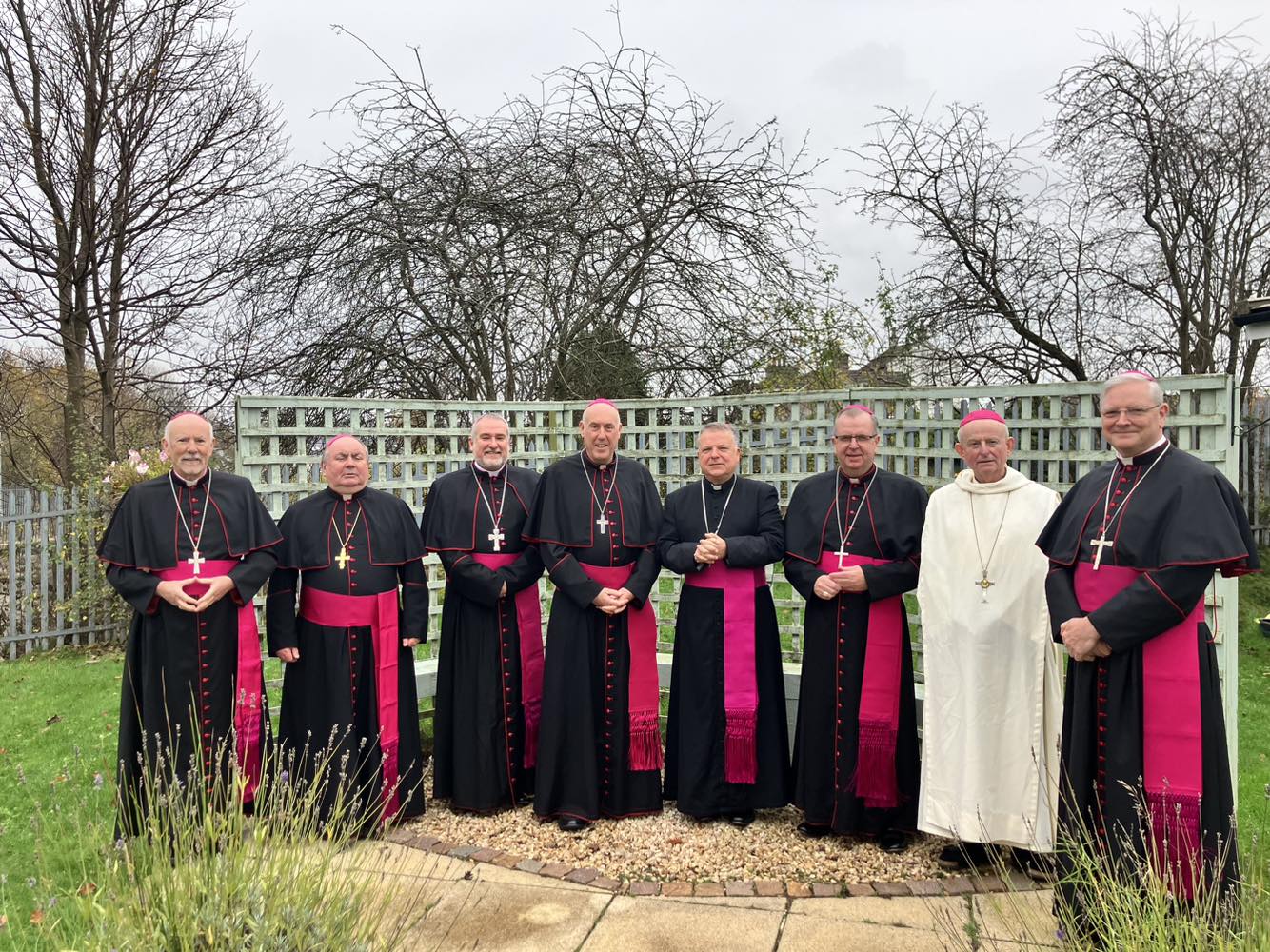
The Scottish bishops have begun a consultation concerning the number of Scottish dioceses. The Church primarily exists for mission: to proclaim in every way the Gospel of Jesus Christ. Diocesan and parish structures exist to promote our missionary work. The bishops want to know if our mission is best supported by our present structures or if an alternative arrangement would be better.
In each diocese the same three questions were used to foster discernment, beginning with mission before examining structures. The three questions were:
The following three questions will be used to focus discernment:
-
-
- Where do we see good examples of mission in our parishes, deanery, diocese and country?
- Where does mission need to develop or even begin? What are the barriers to better mission and what can encourage it?
- Does the present structure of eight dioceses in Scotland support mission? Does our diocese already have all that it needs? Would it help if we were to share resources with another diocese or dioceses? Would it help if our diocese merged with another diocese?
-
In Argyll and the Isles both the Diocesan Pastoral Council and all the clergy were invited to participate in two separate sessions. The discussions were thoughtful, honest and open, lasting for more than four hours each. From these two sessions Bishop Brian collated a report and sent it to the Bishops’ Conference.
Each bishop has now submitted a diocesan report and the bishops will meet on June 11th 2026 and prayerfully discuss what the clergy and laity have said. They will then propose one or several possible ways forward which the Bishops’ Conference will then publicise.
You can read (i) our diocesan collated report which was submitted to the Conference and the initial (ii) clergy’s report and (iii) Diocesan Pastoral Council’s report from which the collated report was written.
The consultation’s method was Conversation in the Spirit. The report’s findings are divided into three sections (i) Convergences – points everyone agreed upon (ii) Divergences – where there was differences of opinion and (iii) areas that need more study.